


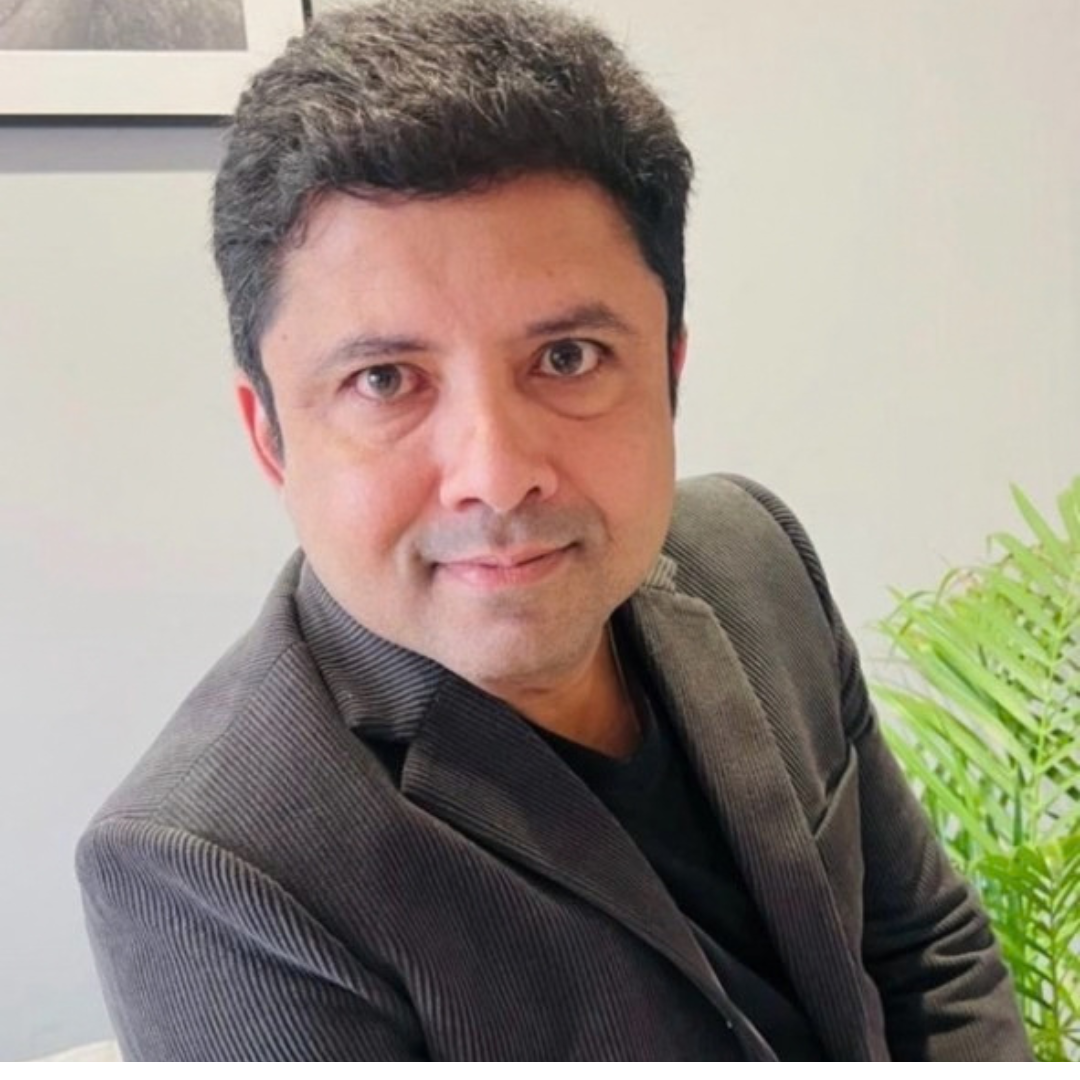
Surajit Bhuyan is a global sales and revenue leader with more than 25 years of experience across technology, international business development and go-to-market strategy. As Chief Sales Officer at Stixis Technologies, he leads global revenue growth and strategic partnerships across the USA, Europe, the Middle East and Africa. His career began far from where it would eventually lead him—as an engineering professional who soon realized that his curiosity extended well beyond writing code. A chance presentation to an American CIO led him into sales, where a mentor taught him to listen, understand customer pain points and build relationships before pursuing business.
Business Now spoke with Surajit Bhuyan about his journey from coding to global sales, building trust across markets, the evolving role of AI and the human principles that remain central to enterprise business.
1. What experiences, challenges and turning points shaped your journey most, and how did each chapter influence the person and business leader you became?
My journey has been anything but linear. Cricket was my first dream. As an only child, I imagined a life on the field, but circumstances eventually steered me toward engineering. Looking back, that detour was anything but a setback—it became the beginning of a journey.
When I arrived in Bengaluru, I started my career as a trainee, earning around ₹3,000 a month. It was a humble beginning, but it taught me the value of starting from the ground up. I soon discovered, however, that while I could write code, my heart wasn’t in it. I was showing up to work every day, but I wasn’t showing up with passion. That realization became an important turning point—it pushed me to look beyond coding and discover where my real strengths and curiosity lay.
Then came a moment I could never have planned. An American CIO was visiting our organisation and wanted the youngest person to present the architecture. I was asked to step forward. I walked into that room as a young technologist, focused simply on getting the presentation right. I walked out without knowing those few minutes were about to open a new chapter in my life.
Shortly afterward, the head of sales called me into his cabin. Instead of the conversation I half feared, he asked me something I never expected. “Would you consider joining sales?” I was genuinely surprised.
I had no formal education in sales or international business. He gave me 24 hours to decide. I called my father. He said, “Try it. If it doesn’t work, you can always go back to coding.” That became the moment that quietly shaped everything that followed. I thought I was being asked to leave. In reality, I was being given the opportunity to discover it.
My Head of Sales became my mentor. He taught me to keep my ego aside, listen, follow instructions and learn. He didn’t immediately put me in front of customers. He trained me through documentation, proposal making, email writing and creative presentations.
Eventually, I started cold calling the American market. That taught me how American CIOs think and how important communication is. On a phone call, you have perhaps 30 seconds to earn another meeting.
My mentor later sent me to the US with a very different responsibility. It wasn’t to sell immediately, but to take care of a client relationship and learn what growth really meant. It was a relatively small account when I took it over. The mandate was ambitious—build it steadily, year after year, until it became a multi-million-dollar relationship. I embraced the challenge. What stayed with me wasn’t the scale of the business we built, but how I learned to build it. My mentor didn’t throw me into the deep end. He taught me, step by step, how to understand a client’s world, how to think beyond transactions, how to engage with C-level leaders, and most importantly, how to earn trust before asking for growth.

That foundation eventually helped me work with strategic customers and become instrumental in setting up offshore development and global delivery centres for organisations including Warner Bros. Music Division, Warner Chappell Music, Louis Vuitton(LVMH) etc.
I never had hundreds of customers. I had strategic customers who trusted me.
Technology taught me problem-solving. Global business taught me how to understand people. Setbacks built resilience, while success taught me humility. Leadership isn’t about having all the answers. It is about listening before leading, adapting before being forced to adapt and earning trust before asking for it.
“Challenges don’t intimidate me; they sharpen me.”
2. Trust is often described as essential to long-term business relationships. What did you learn about trust through your own experiences?
In my early days, excitement sometimes meant I wasn’t listening properly. If you don’t listen, you make the wrong decisions because you haven’t understood the customer’s story or pain point.
I learned that trust isn’t created through a big presentation or PowerPoint deck. It is created when your actions mirror the customer’s vision and when you genuinely understand what they are trying to achieve.
There are two things that can rob you of growth: desperation and excitement.
Since around 2008, I have followed one principle very strongly. If I am meeting a client who may potentially become a customer, I don’t give them a corporate profile presentation. Our team can send the corporate profile separately. When I get into a meeting, I want to understand their story.
What is happening in their business? What are they struggling with? What are their ambitions? What is their pain point?
Unless and until I understand the pain point, I cannot create value.
I always say, don’t be a vendor to a customer; be a partner to a customer. A vendor is focused on a transaction. A partner shares the vision and invests in the outcome.
I remember a CIO I had worked with who left his company and joined another organisation. For nearly three years, we remained friends. We would meet and sometimes have a beer together, but I never asked him for business.
Eventually, business came.
That experience reinforced something important for me: if the relationship is genuine, you don’t need to be desperate. The customer knows whether you are there only because you want a contract or because you genuinely value the relationship.
“Don’t sell to clients, build with them.”
3. As a global sales leader, how has your approach to leadership evolved, particularly while expanding into different geographies and markets?
One of the biggest lessons I learned while entering new markets is that success cannot simply be copy-pasted from one culture to another.
Different markets have different customer mindsets, expectations, cultures and ways of doing business. You have to understand those differences before assuming that what worked somewhere else will work there.
At Stixis, one of the defining questions has always been how to take the organisation to greater heights. There were moments when ambition met friction, particularly when entering new geographies or making decisions without an established playbook.
Earlier in my career, I thought speed itself was an advantage. Today, I believe clarity creates the right kind of speed.
If I could go back, I would listen longer before acting. A deeper understanding of people and circumstances often leads to better decisions.
My leadership philosophy is built around bold ambition combined with humble assumptions. You should have the ambition to build something significant, but remain humble enough to recognise that you may not understand everything about the market, the customer or the people around you.
“Be bold about the ambition, but humble about the assumptions.”
4. AI is transforming sales, technology and business development. How do you see AI changing the role of sales leaders?
I call myself an AI Maverick because I am still an engineer at heart. I started as a coder, although I never formally studied sales. My curiosity about technology and global business eventually took me into sales and go-to-market leadership.
I see AI as a tool that enhances human capability rather than something that automatically replaces it.
For example, a salesperson who struggles with English writing can use AI to remove that bottleneck. Someone who is already a strong salesperson can use AI to add another skill to their toolkit.
I remember when CRM systems first became part of sales processes. There was a fear that technology would replace certain activities, but CRM eventually facilitated lead generation and sales execution. AI will create a similar shift, although it will be much broader.
Companies need to understand that AI isn’t simply another product they can add to a portfolio. It represents business-wide transformation.
Sales leaders therefore need to move beyond pitching capabilities. The conversation should start with the customer’s ambition and the business outcome they want to achieve.
AI can help salespeople research faster, communicate better, create proposals and develop ideas. But everyone has access to these tools. The differentiator will be how creatively people use them and how well they apply their own thinking.
There are also questions around intellectual property and how AI-generated material is presented as part of a company’s brand. AI should enhance the salesperson’s capability, not replace the thinking behind the sale.
“Don’t sell AI, sell the future it unlocks.”
5. With AI becoming increasingly capable, where do you believe human connection still matters most in enterprise sales?
The human touch has not gone because the value proposition and identifying the pain point have not gone.
AI can ask questions, analyse information and help prepare a strategy. But identifying the real problem a customer is facing and understanding what that problem means to their business still requires human involvement.
Consider a simple commodity such as a ₹100 pencil. Perhaps a robot can sell it because the transaction is straightforward.
Enterprise technology is different. When you are discussing a complex transformation, you are talking about business outcomes, risk, investment, people, processes and long-term consequences. The customer is not simply buying technology. They are deciding whether they trust you to help solve an important business problem.
AI can also change the economics of experimentation. Consider a paid pilot. Something that may have previously required around $10,000 can, with AI reducing the human effort involved, potentially be delivered for a fraction of that cost and in a much shorter time frame. The bigger value isn’t just saving money; it’s reducing the risk of trying. With lower risk, businesses can experiment more often, learn faster, and innovate with more confidence.
That reduces cost and risk, but it doesn’t eliminate the need to understand the customer.
Technology can accelerate execution. It cannot remove the need to identify the right problem and create the right value proposition.
6. What responsibilities do you believe sales and business leaders have beyond revenue generation?
Revenue is important, but leadership cannot be reduced to numbers.
For me, responsibility means creating lasting impact. A client relationship may begin with a contract, but lasting relationships are built on trust, value and a shared journey.
I also believe leaders have a responsibility to give forward.
When I hire trainees, I spend the first month understanding how they think. Five trainees can have five completely different levels of thinking. One may be good at market conversations, another may be creative with campaigns. I don’t believe in forcing everyone into the same pattern. I identify their strengths and polish them.
That is why I tell young professionals to read a lot.
For the first three months, I don’t allow trainees to use tools such as ChatGPT for certain learning exercises. The laptop is closed and the phone is put away. I want to understand their brain and skill level first.
Once you have read widely and developed your own thinking, tools such as ChatGPT can become powerful facilitators. If you already have steps one, two and three in your head, AI can help you explore steps four through one hundred.
The tool is valuable, but the thinking has to come first.
“Success is what you build; legacy is what you leave in people.”
7. Sales involves frequent rejection. What philosophy has helped you stay motivated through difficult periods?
Sales is difficult. You can hear 99 no’s before you hear one yes.
That is why I believe a salesperson has to be self-motivated. Your boss cannot motivate you every morning. Your colleagues cannot carry you through every rejection. Ultimately, you have to motivate yourself.
You have to be willing to swim through the 99 no’s to get that one yes.
I also learned early that short-term money should not become the primary motivation. In my early career, I focused on learning, building relationships and understanding the business. The financial outcomes followed the value created over time.
I never had an MBA. A large part of my education came from experience, my mentor and reading. I learned from my Head of Sales and also studied business thinkers such as Tom Peters.
After 2006, I came to believe that lies don’t work in white-collar sales. Trust and value creation have to sit at the centre.
8. What advice would you give to young professionals who want to build meaningful careers in technology and business?
Stay curious.
Don’t chase only titles or numbers. Build relationships that last. Keep reinventing yourself because industries change, technology changes and the skills that create value today may look different tomorrow.
Most importantly, create value for people.
My own career began because someone saw potential in me when I was a young engineer who didn’t enjoy coding. My mentor didn’t give me a shortcut. He taught me how to learn.
Read. Listen. Ask difficult questions. Understand how businesses work. Understand people. Don’t be afraid to enter unfamiliar territory.
And when you get an opportunity, don’t just think about what you can take from it. Think about what you can eventually give back.
Leadership is not only about what you accumulate. It is also about what you amplify in other people.
“A salesperson has to be self-motivated to swim through the 99 no’s and get one yes.”
Follow Surajit Bhuyan