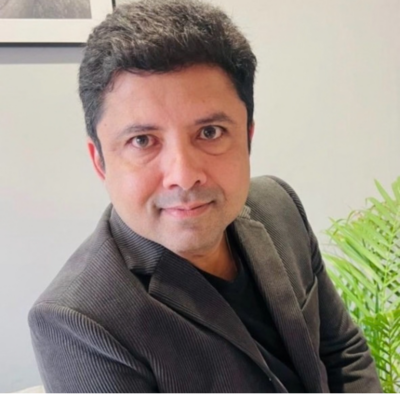


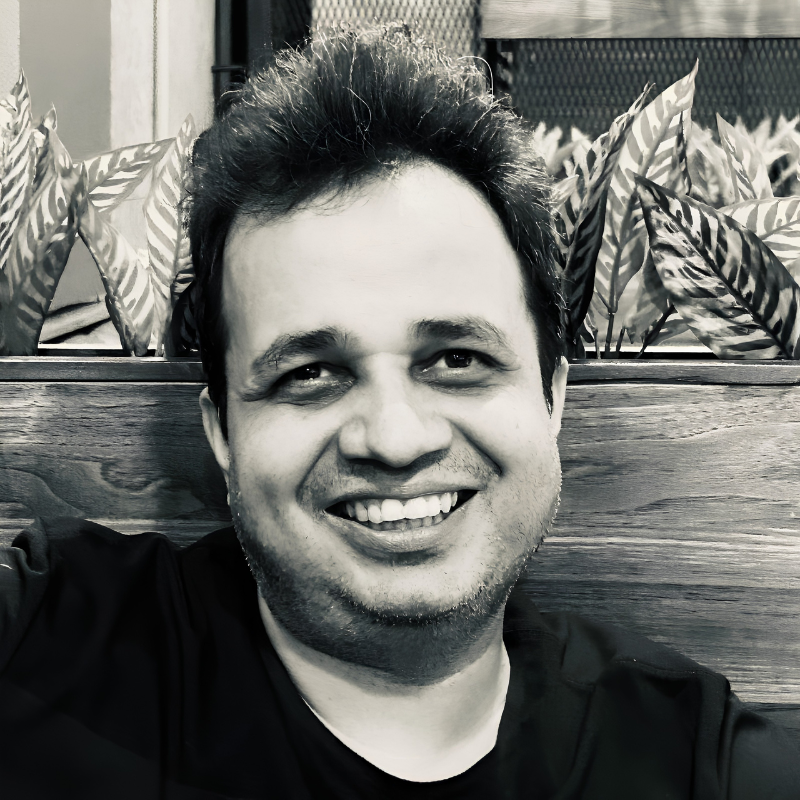
Technology has shaped Dr. Prawaal’s career for more than 25 years, but his journey has been defined less by the technologies he has worked with and more by his willingness to evolve with them. From beginning his career as a software developer to moving into technology leadership, analytics, data science and AI, Dr. Prawaal has consistently expanded his perspective on what technology can achieve. Today, as Principal Data Scientist at Infosys, his work reflects that evolution across AI, analytics and research. His pursuit of a PhD in his 40s added another dimension to his career, turning his longstanding curiosity into structured research and intellectual pursuit. His interests also extend into academia and AI for social good, where he explores how technology can address problems beyond immediate business value.
Business Now got in touch with him to discuss the experiences that shaped his journey, the lessons he has drawn from failure and reinvention, and his perspective on building the next generation of AI talent.
Business Now: Your journey spans more than 25 years, from software development to becoming a Principal Data Scientist and AI leader. Looking back, what were the defining phases that shaped your career?
Dr. Prawaal: Yes indeed, it has been a long journey. More than a quarter of a century, and yet it feels like yesterday. If I do a high-level introspection of my professional journey, I can broadly break it into three phases.
In my initial phase, when I had just graduated from NIT and moved into my first job and beyond, my professional journey was mostly driven by what the company or management decided for me. It was largely on autopilot. More than learning technology, it was about learning how corporates operate. That phase transformed me from a carefree, curious and somewhat ad hoc explorer into a more calculated, articulate and careful individual.
In my second phase, as I progressed into roles as a tech lead, managed small teams and started working closely with clients, including trips onsite, it gave me a perspective on the bigger picture. I started asking myself: What is the core and fundamental reason why software is needed in the first place? What actually drives projects?
The answer, more often than not, was bringing business value to organisations and clients. This phase transformed me from a technology operator into a problem solver.
In my third phase, I started taking my fascination with numbers more seriously. I always loved numbers and how they communicate, confuse and sometimes confront each other. I wanted to make my work coincide with my passion and what I genuinely enjoy doing.
This journey took time because I did not want to take shortcuts. I invested two years in an M.Tech and later almost six years in a PhD, eventually moving entirely into analytics consulting.
Across all these phases, what kept me going was my curious nature, my restlessness and an attitude of always being in flow. Not wanting to remain stagnant, but continuously carving out my own path. And, above all, firmly believing in my intuition.
You describe your career as a gradual evolution rather than one dramatic breakthrough. What made pursuing a PhD in your 40s such a defining phase?
While my journey has been a smooth one, taking one step at a time, there has not really been a single moment where I made a drastic U-turn or suddenly decided to do something completely different.
Right from my school days, I had developed an interest in computer science. When I was in Class 7, I developed a small video game in BASIC. Fortunately, I went on to pursue my graduation in Computer Science from NIT, so my journey was more or less on track.
I have always believed in visualising my future path and then doing whatever is needed to achieve what I aspire to do. There have been no shortcuts or cutting lanes. I firmly believe that investing in the right skills ahead of time always pays off, even if the returns may not be immediate.
Having said that, my PhD journey in my 40s was perhaps the most defining phase of my professional journey. It helped me venture into the world of academic publishing and experience the complete cycle of reason, experiment, validate and publish.
More importantly, it gave me an opportunity to create an intellectual footprint, something that can outlive you and can be extended by fellow researchers to make human life safer, more convenient and fairer for everyone.
I have always been a curious person and have relied on numbers to strengthen my understanding of the world around me. The PhD gave that curiosity a direction. It taught me to channel my absurd questions in a more structured way, challenge my own assumptions, validate what I believe, and convert curiosity into something that can create knowledge and potentially make a difference.
So, if I had to identify a defining moment, I would say it was not one particular event, but the decision to pursue a PhD in my 40s. It reinforced something I had probably believed all along: there is no fixed timeline for learning, reinventing yourself or creating something meaningful.
That decision also brought you face-to-face with failure when you performed poorly in your first PhD qualifying examination. What did that experience teach you?
Operating without challenges is probably not possible in the real world. The nature, severity, duration and impact of those challenges may differ from individual to individual, but everyone’s journey goes through its own set of challenges, and all of us develop our own mechanisms to overcome them.
In my case, the initial challenge was to figure out what I really wanted to do in the long run. After introspecting and trying different options, I was able to figure out that I wanted to move towards a more numerical and empirical professional space because it naturally coincided with the way my brain functions and the things I enjoy doing.
One of the first major challenges was navigating the admission process for a PhD at a top-tier university. I had always been a top ranker and carried a reasonably good academic opinion of myself. All of that came crashing down when I appeared for my first PhD qualifying examination.
I did not just fail; I scored almost zero in most of the subjects. I had completely underestimated the depth, rigour and complexity of the evaluation.
When I saw the result, it was probably one of the most hopeless days of my academic life. But I kept going. I restarted my preparation, understood where I had gone wrong, and appeared again just three or four months later. This time, I scored around 80%.
The next challenge was to manage my professional responsibilities alongside the expectations of a rigorous research programme. That required a lot of discipline and time management, and fortunately, I also received support from my employer, which helped me navigate both worlds.
All of this taught me one very important thing: overconfidence can make anyone fall, and sometimes it can bring you face-to-face with your own limitations.
“The important part is not whether you fall, but how quickly you are willing to acknowledge it, learn from it and get back on your feet.”
AI has evolved dramatically over the last two decades. What has that taught you about staying relevant?
While continuous learning and being ready for change are non-negotiable ingredients for remaining relevant, in my humble opinion, the focus on which knowledge assets we build is equally important.
In my view, there are fundamentally two kinds of skills that we need to navigate a constantly changing technology landscape.
The first, which I call perishable skills, includes getting comfortable with toolsets, platforms and frameworks. In the world of AI, this could mean setting up infrastructure on hyperscalers and working with AI-ops across AWS, Azure, Google and others; programming languages such as Python; orchestrators such as LangChain and RAGAS; agentic frameworks such as CrewAI and LangGraph; or the surrounding ecosystem, such as vector databases.
These skills are important, but they continuously evolve and are relatively easier to acquire or replace as technology changes.
The second kind of skills is less perishable. These are the fundamentals that tend to outlive the tools built on top of them. They include understanding what happens under the hood of APIs, developing an intuition for algorithms, and understanding the mathematics and concepts that power them.
In AI, this could mean probability, calculus, linear algebra, optimisation, and a deep conceptual understanding of the architectures behind modern LLMs, including transformers, how they are trained and optimised, and how the learning process ultimately connects to loss functions.
I believe that if your foundational skills are strong, the perishable skills can be acquired relatively easily. Tools will change, frameworks will come and go, and today’s popular platform may become obsolete tomorrow. The ability to understand what is happening underneath the abstraction gives you the ability to learn the next tool much faster.
“Don’t invest all your learning in the tool; invest in understanding the problem that the tool is trying to solve.”
This becomes even more relevant as we look ahead. If tomorrow digital computing evolves significantly towards quantum computing, someone with strong foundational skills in mathematics, algorithms and computational thinking would, in my view, be in a much better position to make that transition than someone whose expertise is limited to a particular set of tools or frameworks.
Beyond your work in AI, what drives your involvement in academia and AI for social good?
I believe most of us are split between two selves, or perhaps two aspirations, within us. Throughout our lives, we keep switching between these two, sometimes out of compulsion and sometimes by voluntary choice.
The first part is regulated by the world we operate in and the various instruments we need to navigate that world successfully. These include money, responsibilities, career, and other tangible things that allow us to live comfortably and without insecurities, both for ourselves and for our families, in the present as well as in the future.
The second part is more fluid, free of constraints and more meaningful. It is the part that makes you happy even when there is no material benefit attached to it.
For me, that second part is my association with academia and my interest in building projects for social good. It allows me to work on research where the objective goes beyond business value, research that can potentially reduce digital inequality, bring the less privileged into the digital ecosystem, and give them access to opportunities that they deserve.
Most of my collaborations with academia revolve around this idea of AI for good. It gives me a sense that whatever I am learning and building is not only creating value for a business, but can also contribute to solving problems that affect people who may otherwise remain outside the benefits of technology.
And perhaps that is what keeps me going beyond the workplace: the opportunity to operate in that space where knowledge meets purpose, and technology meets people who need it the most.
Why do you believe academia and industry need to work more closely together to shape the next generation of AI talent?
I also strongly believe that academia and industry need each other.
Academia provides the theoretical foundation, the freedom to explore fundamental questions and the rigour of research. Industry, on the other hand, brings the reality of scale, constraints, customers, implementation and the messy problems that exist in the real world.
When these two come together, we have a much better chance of building something that is both theoretically sound and practically relevant.
For students coming out of universities, this connection is particularly important. It is not enough for them to know what can be done theoretically; they should also get a feel for what they are going to encounter once they step into the real world.
Exposure to industry problems while still in academia can help them understand how their knowledge translates into impact.
With software engineering itself being reimagined by AI, what advice would you give young engineers about building a meaningful career?
It is easy to dispense advice; it is much harder to live someone else’s reality, look at the world from their perspective and then offer something that may genuinely help them.
In today’s world, where software engineering itself is being reimagined, this becomes even more difficult. Programming was probably one of the most cognitive and sought-after skills while I was a young engineer, and today a large part of it is getting commoditised. So what worked for me back then may not necessarily work for someone entering the profession today.
However, I do believe there are some timeless things that remain relevant.
I tell this to everyone, including my son. It sounds almost too obvious: figure yourself out first. But like most simple things in life, it becomes surprisingly difficult when you actually try to do it.
Don’t run behind professions or lifestyles simply because they look fancy, cool or successful from the outside. What looks like a perfect fit for someone else may be completely wrong for you. So, find yourself first, understand where your natural strengths and interests lie, and then navigate in that direction.
The world will keep changing, but knowing yourself gives you a much better compass to navigate that change.
Education, training and mentorship can sharpen your skills, but they cannot fundamentally change what you are wired for. So explore, introspect and experiment. Find the intersection of what you are good at, what you enjoy and what gives you a sense of purpose, and then build your journey around it.
“A fish can spend years training to climb a tree, but that doesn’t make the fish a bad learner; it probably means it chose the wrong sport.”
I have also always believed that we should not make money the objective function of our lives. Money should ideally be a by-product of what we do well and what we enjoy doing, rather than the sole reason for doing it.
If you build the right capabilities, create value and remain passionate about what you do, the financial rewards will usually follow.
How should young professionals approach failure, setbacks and life beyond their profession?
When it comes to failures, heartbreaks and dead ends, it is easier said than done. Every individual goes through their own share of pain, and there is no shortcut around it.
I believe it is important to introspect, take the learnings, accept what went wrong and then get back and try again. Many great leaders, sportsmen and geniuses did not achieve what they eventually became known for in their first attempt.
And finally, I would say: don’t let your profession become your entire life.
It is important to focus on mental health and keep yourself mentally strong and motivated, but that strength doesn’t come only from classrooms and boardrooms. Explore hobbies. Travel. Spend time outdoors. Make friends, real ones, not just digital connections. Spend time with family. Experience life beyond books, degrees, job titles and targets.
Because at the end of the day, a meaningful career is not just about how successful you become professionally. It is also about whether you remained true to yourself, continued to learn, created something that mattered to you, and had a life worth remembering beyond your professional achievements.
Know more about him: Dr Prawaal